
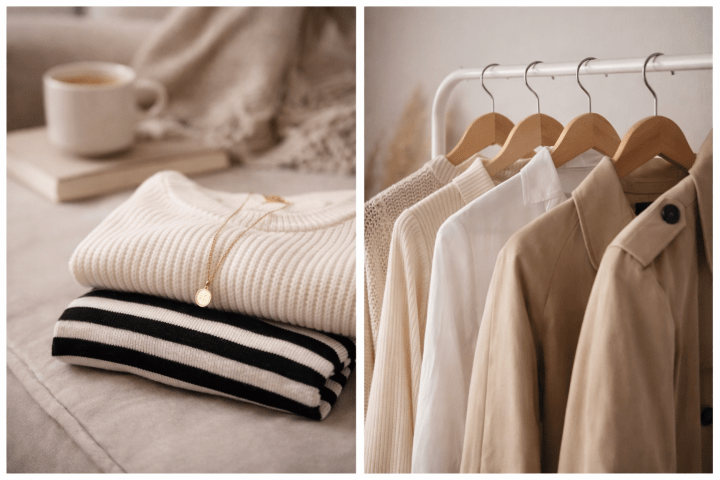
During big life changes like a breakup, moving house, changing jobs, grief, recovery, getting dressed can suddenly feel strange. Not difficult in a dramatic way, just… off.
You might keep wearing the same few things over and over. Or find yourself unable to throw away clothes you haven’t touched in years. Maybe your wardrobe feels full, but nothing feels quite right.
This isn’t about being bad at decluttering or not knowing your style anymore. It’s usually about what transitions do to our sense of identity and safety.
Clothes as Familiar Ground
When life changes, the nervous system reacts first. Even positive change brings uncertainty, and uncertainty can feel destabilising at a body level.
Familiar clothes offer something predictable. You know how they fit. You know how they feel on your skin. There’s no decision-making, no risk of feeling exposed or uncomfortable.
Psychologically, this familiarity matters. Clothing can act as a reminder that some parts of life are still steady, even when everything else feels up in the air.
Identity Doesn’t Update Overnight
Transitions often create a gap between who we were and who we’re becoming. The old version no longer fits fully, but the new one isn’t clear yet.
Clothes sit right in the middle of that gap.
Letting go of certain items can feel harder than expected because those pieces are tied to specific versions of ourselves, a job, a relationship, a time when things felt more certain.
Holding onto clothes during this phase isn’t about being stuck. It’s often a way of giving the mind and body time to adjust.
Why the Body Prefers the Familiar
From a nervous system perspective, familiarity signals safety. When stress levels are higher, the body looks for cues that reduce effort and uncertainty.
This is why people often gravitate toward the same outfits during emotionally demanding periods. Familiar clothes lower sensory and emotional load. There are no surprises.
Research on stress and trauma shows that predictability can be regulating for the nervous system. Clothing becomes part of that regulation, even if we’re not consciously thinking about it.

Why Letting Go Can Feel Emotional
People are often caught off guard by how emotional clearing out a wardrobe can be.
A dress you no longer wear might represent confidence you once had. Work clothes might be linked to structure, ambition, or a sense of purpose that’s changing.
Letting these items go can feel like closing a chapter before you’re ready. That’s why forcing a ‘fresh start’ wardrobe during a transition can sometimes feel unsettling rather than empowering.
You Don’t Need to Reinvent Yourself
There’s a lot of messaging around using change as a chance to reinvent yourself, new aesthetic, new wardrobe, new identity.
But psychologically, transitions aren’t about erasing who you were. They’re about integration.
It’s okay for old and new to exist side by side for a while. One familiar piece paired with something new. One outfit that feels safe, another that feels experimental.
Dressing Through Change
If you notice yourself clinging to clothes during a transition, it can help to approach it with curiosity rather than judgement:
- What does this piece remind me of?
- Does it make me feel grounded or protected?
- What feels supportive right now, rather than aspirational?
Transitions take time. Identity shifts more slowly than circumstances.
Sometimes clothes stay longer than chapters because the nervous system needs continuity while everything else is changing. That isn’t resistance, it’s adaptation.
 mindandfashion.com